

Environmental portrait photography places your subject in their natural setting, whether that’s a chef in their kitchen, a musician surrounded by instruments, or a couple in the backyard where they got engaged. Unlike traditional studio portraits that isolate subjects against plain backgrounds, environmental portraits tell a richer story by weaving together who someone is with where they belong. The technique combines portraiture fundamentals with location scouting and storytelling, transforming an ordinary headshot into a meaningful narrative that resonates with viewers and clients alike.
The growing popularity of this portrait style makes perfect sense. Couples planning weddings want engagement photos that showcase their favorite hiking trail or the coffee shop where they first met. Small business owners need marketing images that demonstrate their craft in action, not just a stiff professional headshot. The approach feels authentic because it is, and with modern capture tech offering better low-light performance and dynamic range than ever before, photographers can now create stunning environmental portraits in challenging locations that would have been impossible just a few years ago.
Learning to shoot environmental portraits requires balancing technical skills with creative vision. You’ll need to manage natural or available light, direct subjects who might feel awkward in their own space once a camera appears, and compose shots that highlight both the person and their environment without letting either element overwhelm the frame. The process takes practice, but the results deliver images with depth, personality, and staying power that generic studio portraits simply can’t match.
What You’ll Need to Create Environmental Portraits
You don’t need a camera bag full of specialized gear to start capturing environmental portraits. A reliable camera body and a lens with decent low-light performance will get you far, many photographers work successfully with a basic DSLR or mirrorless camera paired with a 35mm or 50mm prime lens. The key difference between environmental portraiture and studio work is that you’re working with existing light and space, which means your gear needs to be adaptable rather than extensive.
- Camera with manual controls (full-frame or crop sensor both work fine)
- Versatile lens between 24mm and 85mm for capturing both subject and surroundings
- Portable reflector or small LED panel for filling shadows
- Tripod for stability in lower light situations
- Backup battery and memory cards
Beyond the hardware, spend time scouting your location before the shoot. Walk the space at the same time of day you plan to photograph, noting where natural light falls and identifying distracting elements you’ll need to work around. This preparation matters more than owning expensive equipment, understanding how afternoon sun streams through a workshop window or how morning light fills a café tells you where to position your subject for the most compelling results.
If you’re working with clients who want premium deliverables, modern technology opens additional creative possibilities. Shooting in 4K resolution gives you flexibility to crop and reframe during editing while maintaining image quality. For immersive documentation of a business environment or special venue, techniques like a 360 walkthrough let viewers experience the full context where the portrait was made. These advanced options aren’t essential for strong environmental portraits, but they’re worth considering when the story you’re telling benefits from showing the complete space.
Talk with your subject beforehand about what they’ll wear and what props or elements in their environment matter most to them. A musician might want their instrument visible, while a baker’s portrait gains authenticity with flour-dusted hands and their signature sourdough in frame. These conversations shape your technical choices and help you pack the right gear for the specific story you’re capturing.
Planning Your Environmental Portrait Session
Choosing the Right Environment

The right environment acts as a visual biography for your subject. Start by asking what space genuinely defines them, not where they want to be photographed, but where they spend meaningful time. A chef belongs in their actual kitchen with worn cutting boards and favorite knives visible, not a pristine showroom setup. A couple might choose the coffee shop where they had their first date rather than a generic park, because those specific tables and that worn brick wall carry their story.
Look for environments with authentic details that reveal personality without explanation. A business owner’s workspace tells a richer story when you can see their organizational style, the tools they actually use, and the small personal touches on their desk. These elements become supporting characters in your portrait, providing context that pure headshots cannot deliver.
Consider how the space complements rather than competes with your subject. Busy environments work when the details are relevant, a musician surrounded by instruments, a florist among their arrangements, but avoid locations where visual clutter distracts from the person. The environment should frame and enhance your subject’s presence, not demand equal attention.
When to Watch Out: Common Planning Pitfalls
Before you step into the field, protect yourself and your shoot by addressing these critical planning issues. Location permissions are often overlooked, many public parks, private businesses, and even busy sidewalks require film and photography permits especially if you’re using professional equipment or assistants. Check regulations at least two weeks ahead, as permit approval can take time and fees vary widely.
Privacy concerns extend beyond your subject. Scout locations beforehand to identify bystanders who might wander into frame, confidential documents visible on desks, or recognizable faces in the background that require releases. Distracting backgrounds derail environmental portraits more often than technical errors, a cluttered workspace tells the wrong story, bright exit signs draw the eye away from your subject, and busy patterns compete for attention. Walk the full shooting area with your camera to preview what elements enhance the narrative and which ones you’ll need to minimize, move, or avoid entirely.
Step-by-Step: Shooting Environmental Portraits
Composing Person and Place Together
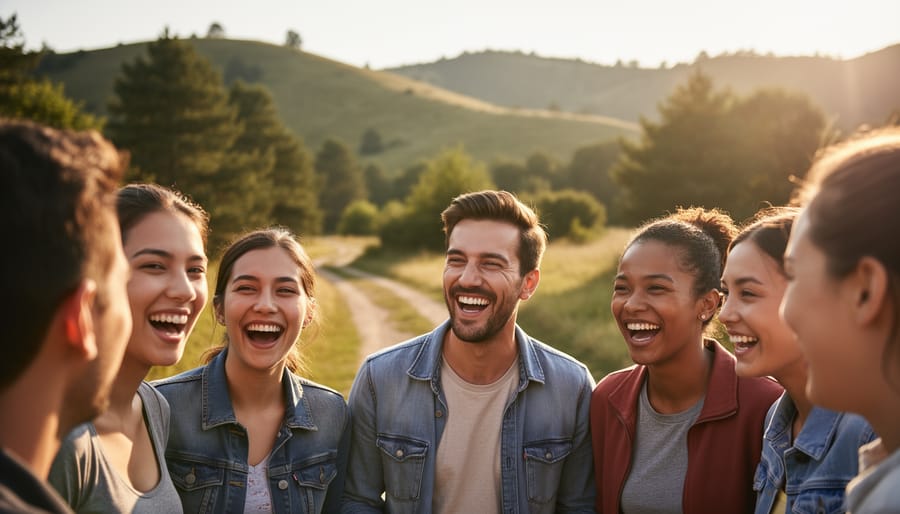
The moment you look through your viewfinder, you’re making decisions about how much story to tell. A tight crop on your subject reveals personality but loses context, pull back too far and you’ve documented a space rather than captured a portrait. The sweet spot shows enough environment to explain why this place matters without turning your subject into set dressing.
Start with the rule of thirds as your foundation. Position your subject at one of the intersecting points rather than dead center. This creates natural breathing room for the environment to speak. A baker positioned at the left third lets you include the wood-fired oven and worn workbench on the right, these elements explain their craft without competing for attention.
Foreground and background layers add depth that flattens in most studio work. Place a restaurant owner between prep tables in the foreground and the dining room behind them, and you’ve compressed their entire operation into a single frame. This technique works brilliantly for commercial sports portraits too, position an athlete with equipment nearby and their training space stretching behind them.
Watch your subject’s size relative to the frame. They should occupy roughly one-third to half the composition. Smaller than that and you’re shooting location photography with a person in it. Larger and you might as well be in a studio. Squint at your viewfinder, if the environment disappears when slightly out of focus, you haven’t shown enough context to tell the story.
Technical Settings for Sharp Results
Getting technically sharp environmental portraits means balancing three exposure elements while keeping enough of the scene in focus to tell your story. Start with aperture, your depth of field controller. For environmental portraits, f/2.8 to f/5.6 works beautifully when you want a softly blurred background that still shows context, while f/8 to f/11 keeps more of the environment crisp when the location itself matters as much as the person. If you’re shooting a chef in their bustling kitchen, f/4 might blur just enough to suggest activity without losing the setting’s character.
Shutter speed needs to freeze both your subject and any environmental movement. Aim for at least 1/125th second as your baseline, faster if there’s action in the scene or if you’re handholding a longer lens. For a baker pulling bread from an oven, 1/250th captures the motion without blur. ISO becomes your flexibility tool: keep it as low as lighting allows (100-400 in bright conditions), but don’t hesitate to push to 1600 or 3200 in dim interiors rather than losing the shot entirely. Modern cameras handle higher ISOs remarkably well.
Take advantage of your camera’s assist features. Focus peaking highlights exactly what’s sharp in your frame, invaluable when composing environmental shots with multiple depth planes. Zebra patterns show overexposed areas in real-time, helping you preserve detail in bright windows or outdoor highlights while keeping your subject properly exposed. These tools transform guesswork into precision, letting you concentrate on the story you’re capturing.
Making It Personal: Customization Options for Different Needs

Every environmental portrait session tells a different story, which means your approach should flex to match your subject’s needs and budget. Whether you’re capturing a milestone birthday at someone’s childhood home or helping a small business owner create authentic marketing images, the core technique stays the same, but the execution adapts significantly.
Tailoring Your Approach by Event Type
Different occasions call for different environmental portrait strategies:
- Wedding portraits work beautifully in meaningful venues like the couple’s first-date restaurant, their favorite hiking trail, or a family home where they got engaged
- Birthday celebrations shine when photographed in locations that reflect the person’s passions, a musician in their home studio, a gardener among their raised beds, or a book lover in their neighborhood library
- Anniversary shoots gain depth when revisiting the wedding venue, the spot where the proposal happened, or a place that represents shared interests developed over the years
- Marketing photography for business owners demands environments that demonstrate expertise, a baker with hands dusted in flour at their workstation, a yoga instructor in their studio space, or a consultant in their thoughtfully designed office
The beauty of environmental portraits is that you don’t need expensive gear to start creating compelling images. A smartphone with portrait mode can capture authentic moments in natural light, especially if you sharpen your skills in composition and timing. Position your subject near a window during golden hour, and you’ll achieve results that rival studio setups.
For clients seeking premium quality, modern technology offers remarkable possibilities. 4K resolution captures intricate details in both the subject and their surroundings, while 360-degree videography creates immersive experiences that let viewers explore the entire environment. These advanced options work exceptionally well for business marketing, where potential customers want to feel like they’re stepping into an authentic workspace rather than viewing a staged photoshoot.
Reviewing Your Work and Next Steps
What Makes an Environmental Portrait Successful
A successful environmental portrait strikes a delicate balance between showcasing your subject and telling their story through surroundings. Start by checking whether you can identify both the person and their environment within three seconds of viewing, if either element dominates completely, the balance is off. Your subject’s face should be sharp and well-exposed with a natural expression that reflects their relationship to the space, not a forced smile that ignores their context.
Look for what photographers call “contextual clarity”, viewers should understand why this particular person belongs in this specific environment without needing explanation. The background elements should support rather than compete with your subject, adding meaning without creating visual clutter. Check your composition for intentional negative space and leading lines that guide the eye to your subject while still revealing their surroundings.
Technical quality matters too: ensure proper focus on the subject’s eyes, adequate depth of field to show enough environmental detail, and exposure that doesn’t sacrifice either the person or the place. If you’re using 4K resolution or high-resolution stills, zoom in to verify sharpness across the frame. The most successful environmental portraits feel authentic rather than staged, capturing a genuine moment where person and place connect naturally.
Learning More About Environmental Portraiture
Building your environmental portrait skills takes practice and learning from experienced photographers. The good news is that dedicated educational resources exist across multiple formats, from structured online courses to intensive artist residencies, making it easy to find learning opportunities that match your schedule and commitment level.
Online photography workshops offer the most accessible entry point. These programs typically run for several weeks, combining video instruction with assignment feedback and community discussion. While specific course dates and enrollment periods vary throughout the year, many photography education providers offer environmental portrait classes that you can join from anywhere. If you’re interested in a particular workshop but registration has closed, reach out directly to the organizers to learn about future sessions, most programs run multiple times annually.
For serious artists ready to deepen their practice, photography residency programs provide immersive experiences. These selective opportunities bring together small cohorts of photographers working in similar genres, offering mentorship, critique sessions, and collaborative learning. Recent residencies have hosted environmental portrait specialists alongside other documentary and narrative photographers in cities like Amsterdam, Riga, and Budapest, creating international learning communities.
Professional photography associations and online forums also provide ongoing education through portfolio reviews, technique discussions, and peer feedback. Look for communities focused specifically on portrait or documentary work rather than general photography groups, you’ll find more relevant critique and specialized knowledge about balancing person and place in your compositions.
Start with one learning format and commit fully rather than sampling everything at once. Your environmental portraits will improve faster through focused practice with structured feedback than through scattered self-study alone.
Common Questions About Environmental Portrait Photography
The questions people ask about environmental portrait photography often reveal the same hesitations and curiosities. Here are the answers that come up most frequently when photographers and clients discuss this style.
Do I need expensive equipment to shoot environmental portraits?
No, you can start with a basic camera and one lens. A standard zoom or 50mm prime works well, and natural light handles many situations without additional gear.
How is an environmental portrait different from a regular portrait?
Environmental portraits show your subject within a meaningful location that reveals something about who they are, while traditional portraits focus solely on the person against a plain or neutral background. The environment becomes part of the story rather than just backdrop.
What time of day works best for outdoor environmental portraits?
The golden hours, roughly the first hour after sunrise and the last hour before sunset, offer the most flattering natural light. Overcast days provide soft, even lighting that works beautifully throughout the day.
How do I help my subject feel comfortable in their environment?
Let them interact naturally with their surroundings rather than just standing still. A chef might prep ingredients, a musician might tune their instrument, these genuine actions reduce self-consciousness and create more authentic portraits.
Another common concern involves location access. You don’t always need permission for outdoor public spaces, but private businesses, nature preserves, and commercial properties typically require advance authorization. A quick phone call saves disappointment on shooting day.
Weather backup plans matter more for environmental portraits than studio work because you can’t reschedule a toddler’s birthday or a business owner’s limited availability as easily as you might think. Having an indoor alternative for your carefully chosen outdoor location keeps sessions on track when conditions don’t cooperate.
Environmental portrait photography transforms ordinary headshots into compelling visual stories by weaving together who your subject is with where they belong. When you capture someone in their natural element, whether that’s a chef surrounded by their kitchen tools, a couple strolling through the park where they first met, or a business owner standing in the workspace they built, you create images that resonate far deeper than any studio backdrop could achieve. The environment provides context, authenticity, and emotional weight that viewers instantly connect with.
Start simple. Choose familiar locations and willing subjects who feel comfortable in their surroundings. Your neighbor in their garden, a friend at their favorite coffee shop, or even yourself in a meaningful space can become your first successful environmental portrait. The key is matching person to place with intention.
When you’re ready for professional results, Past & Present Studios brings environmental portraiture to life through modern technology and flexible customization. Whether you need intimate wedding portraits captured in a venue close to your heart, marketing photography that showcases your business authentically, or anniversary images celebrating your favorite locations, the studio adapts to your vision. With capabilities including 4K resolution and 360 videography, your environmental portraits can tell stories as dynamic as the people and places within them.